October 2026 Release Notes
Last updated: October 14, 2026
HackerRank’s October release helps you build your hiring process for the agentic era, with updates to Chakra and Interview that reflect how developers work with AI.
Chakra now has Code Repository questions in the Agentic Development Environment (ADE), the AI native platform familiar to developers. The new AI Fluency evaluation assesses how candidates frame problems, guide AI, and judge its output. More flexible question setup and refreshed reports help you tailor interviews to your hiring needs and review candidate performance and integrity.
The interview has a new improved experience with a shared ADE, Plan-Build-Review questions, and a faster, more responsive workspace. Improved Observation Mode lets your team view a candidate’s entire desktop on demand, giving you more visibility into how they work.
Through HackerRank MCP, connected AI models can retrieve and review information from Chakra and Interview.
These updates will go live by October 28. Join our customer webinar on October 28 to learn more.
Chakra (AI Interviewer)
Code Repository Questions in ADE
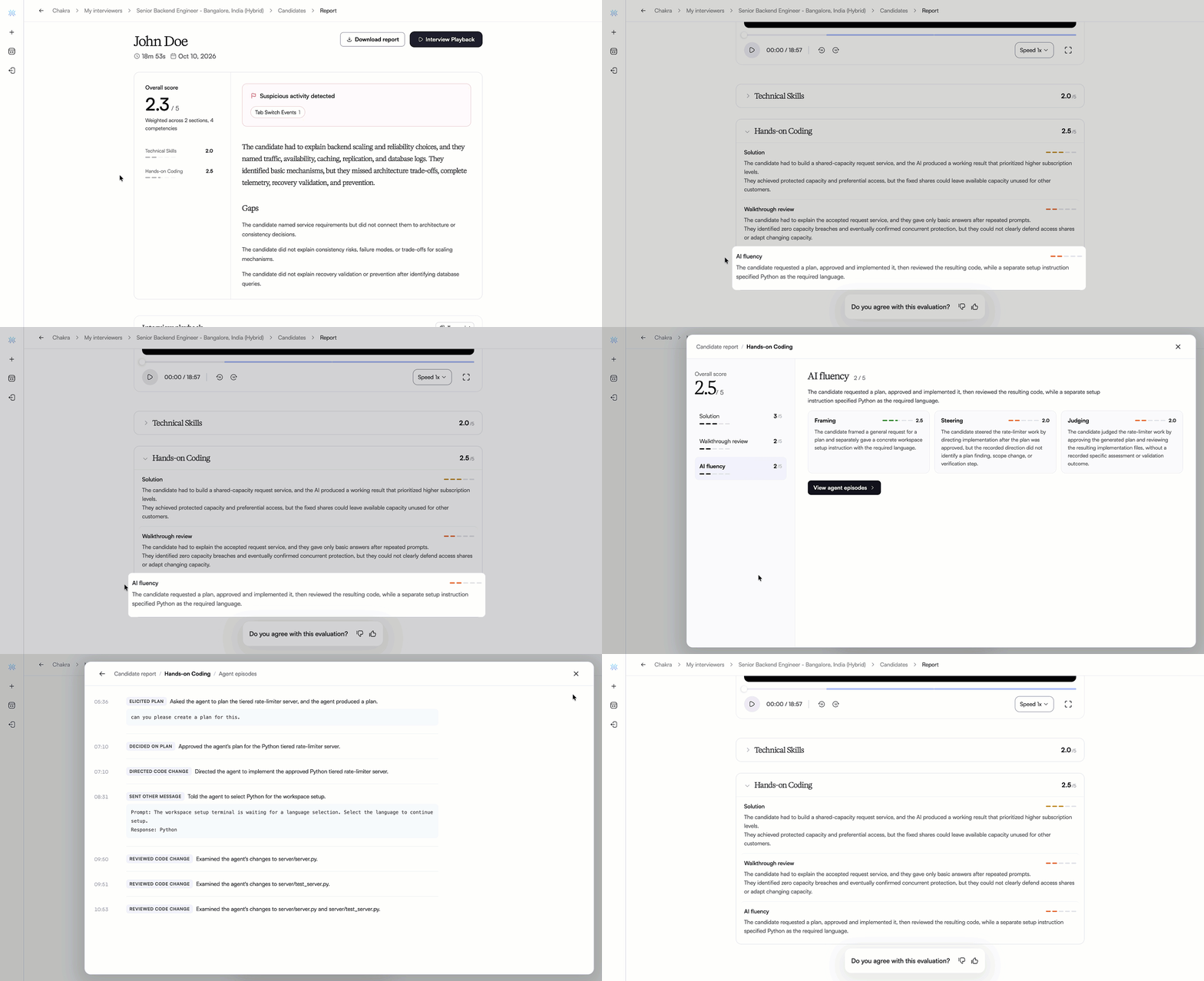
Chakra now supports real-world Code Repository questions in the Agentic Development Environment (ADE). Candidates can explore an existing codebase, understand the requirements, plan their approach, build with AI, and explain their solution and thought process to Chakra. This provides a more realistic view of how candidates solve engineering problems and collaborate with AI in an environment that reflects day-to-day software development.
For Code Repository questions, Chakra also provides an AI Fluency evaluation across three dimensions:
Framing: How effectively candidates define the problem and provide relevant context to AI.
Judging: How effectively candidates review, validate, and apply AI-generated outputs.
Steering: How effectively candidates guide, refine, and redirect AI toward a solution.
This framework gives you greater insight into how candidates collaborate with AI throughout real-world development tasks, beyond the final solution they produce.
HackerRank MCP Support for Chakra
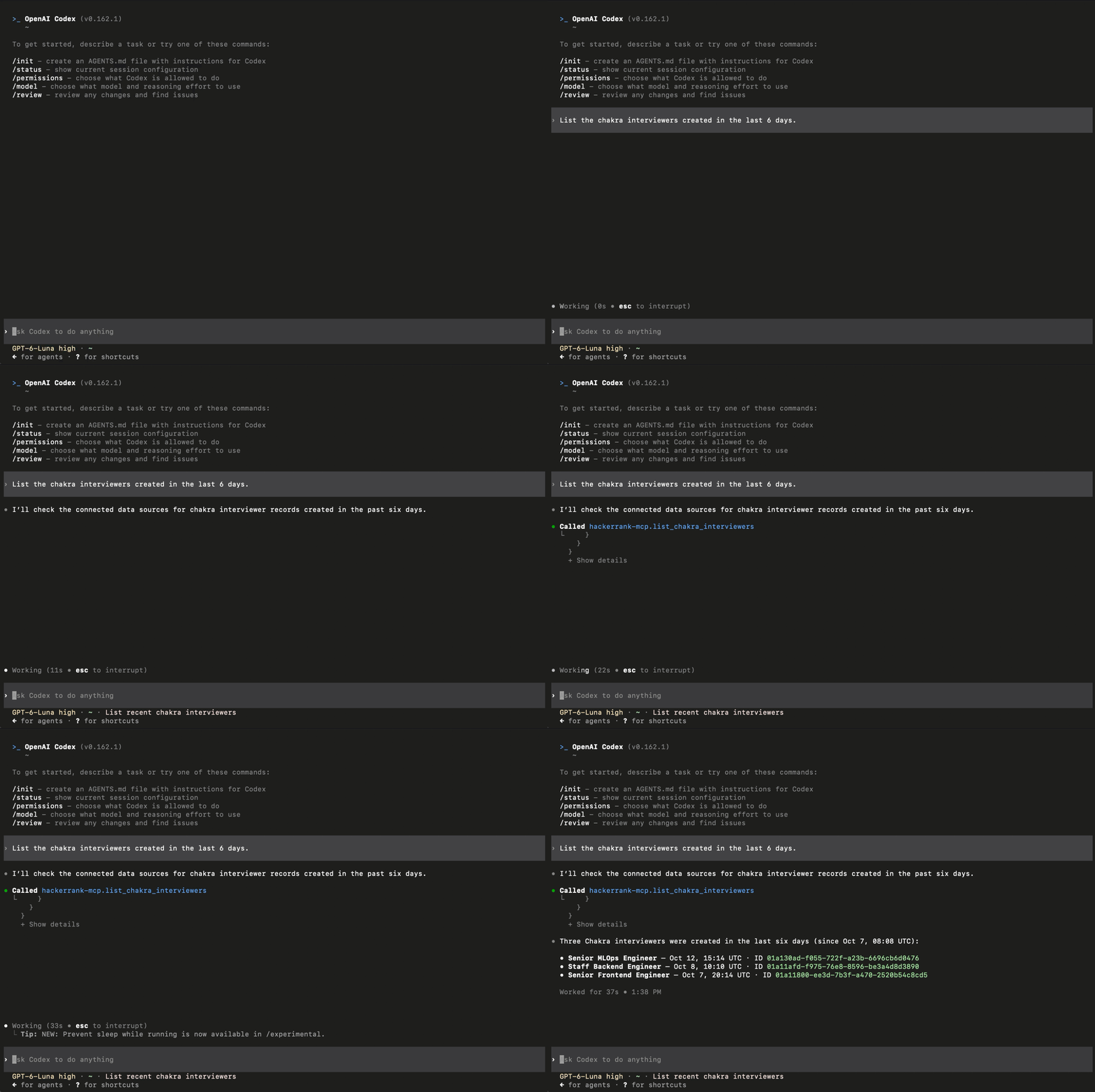
Bring Chakra into the AI tools and workflows you already use with HackerRank MCP. From a connected AI tool like Claude Code or Codex, you can find AI Interviewers and matching hands-on questions, review candidate evaluations and transcripts, and invite candidates to Chakra after confirming the invitation details. This lets you handle key parts of the Chakra workflow from your existing AI tools.
Creation Improvements in Chakra
Create Custom Coding Questions
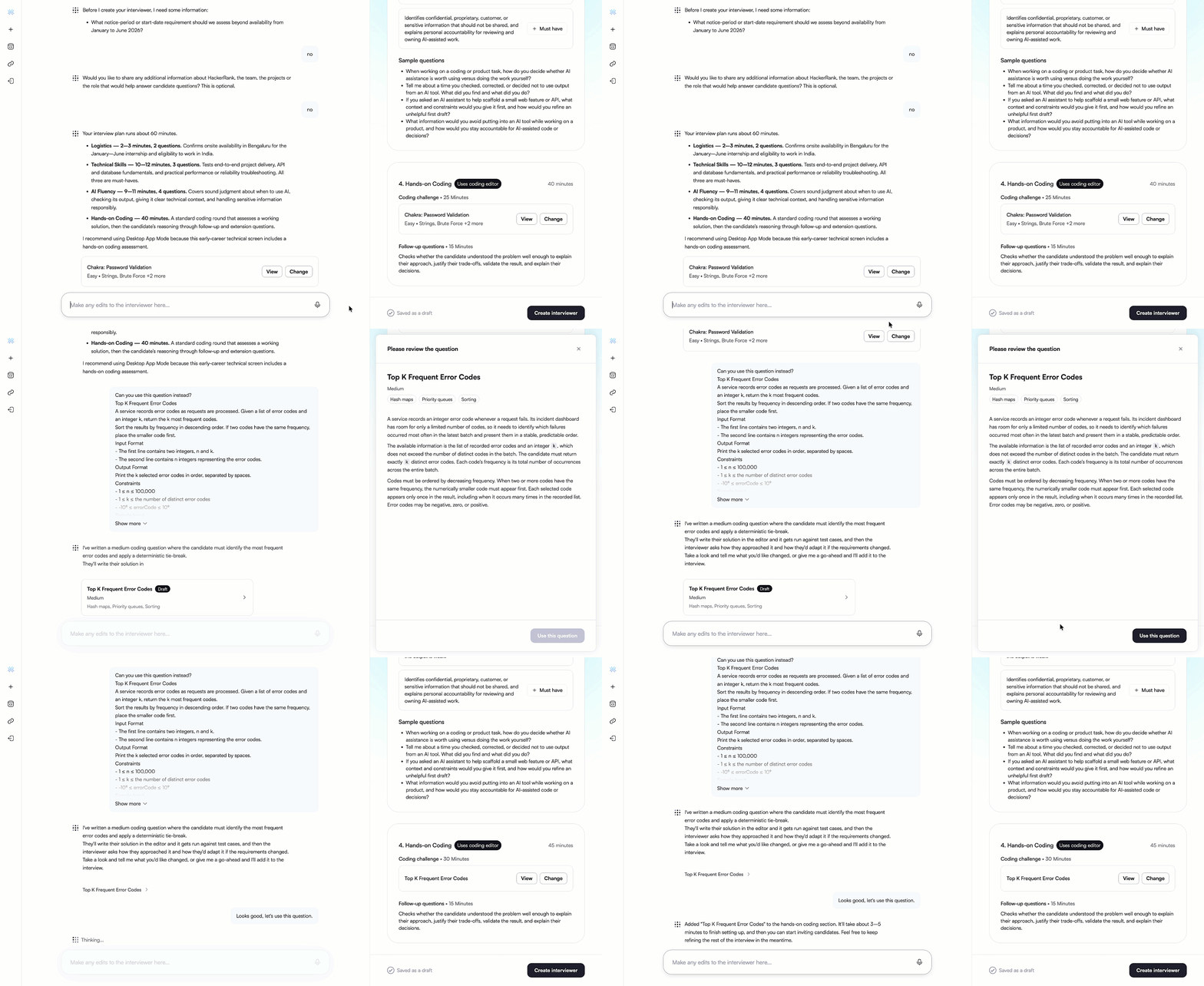
You can now create custom Coding questions when setting up an interviewer in Chakra. This lets you bring your team’s preferred Coding questions into Chakra.
Change Coding and Code Repository Questions
Adapt Chakra to your assessment approach by changing the questions that a candidate will be asked to solve. When creating or editing your Chakra, review alternative Coding and Code Repository questions and swap in the ones you want.

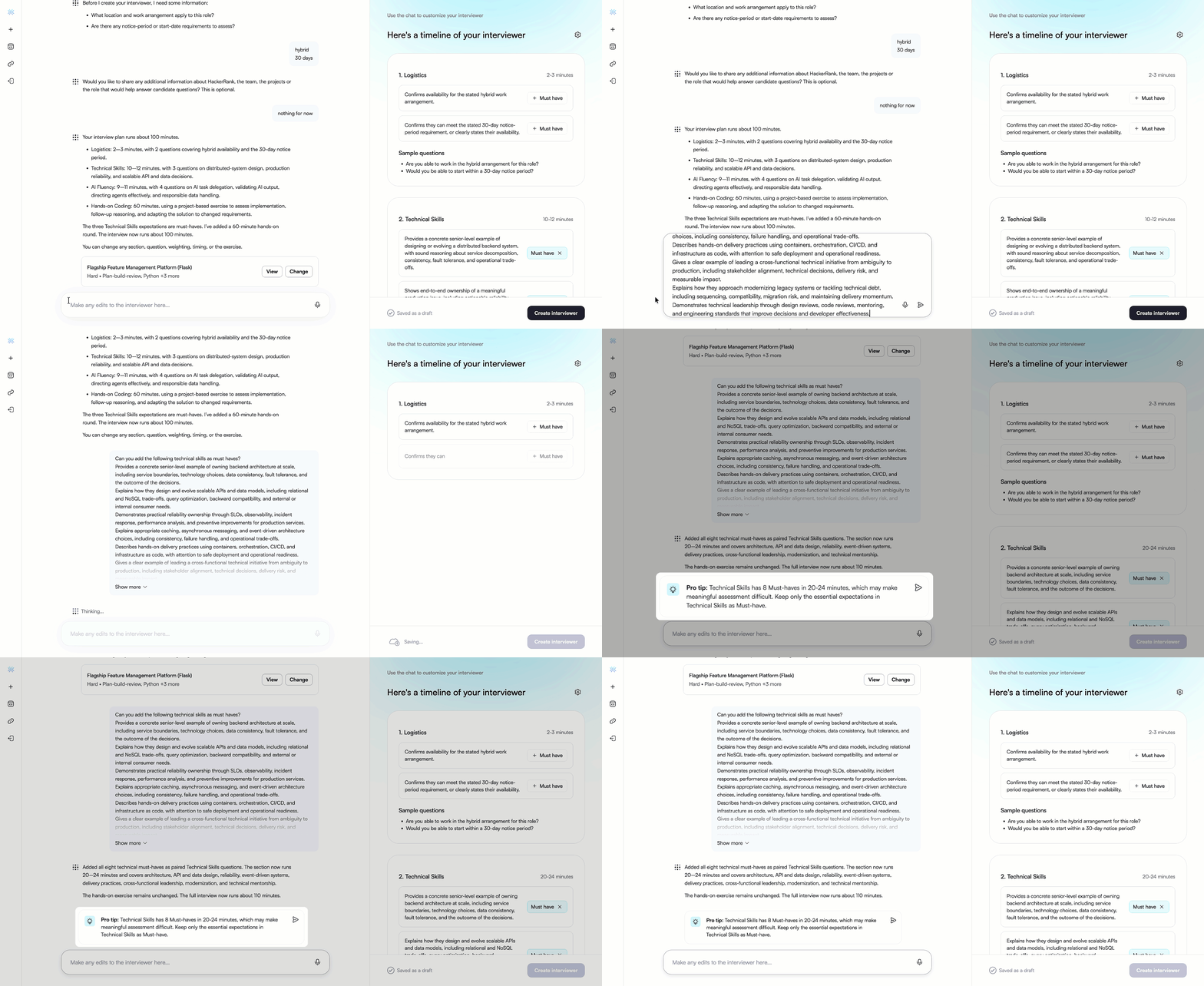
Pro Tips During Interview Setup
Keep your interview plan focused and at the right length. During setup, Chakra flags potential issues, such as an interview that’s too long, and suggests changes you can make before creating the interviewer.
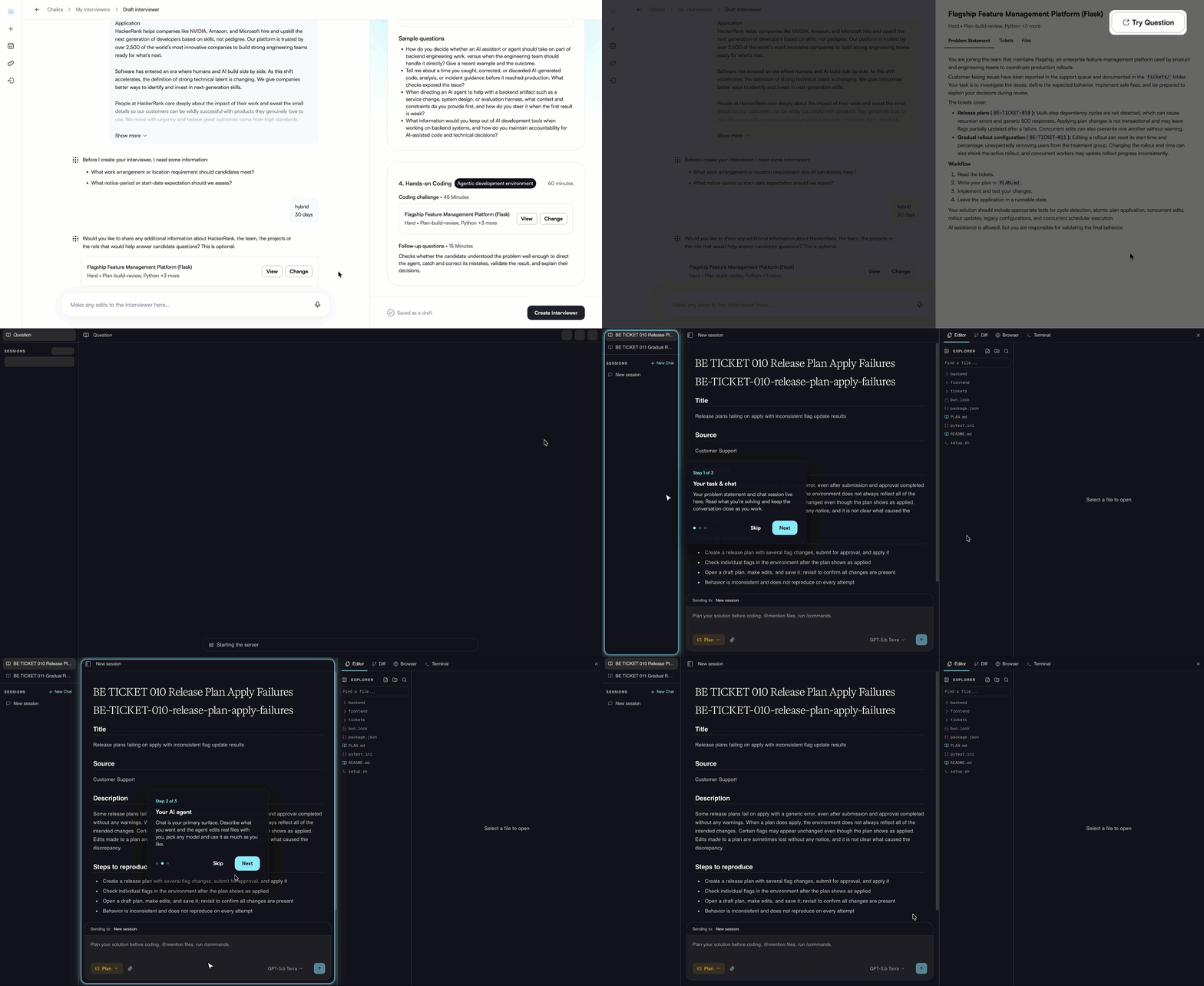
Try Questions
You can now try a Code Repository question as a candidate in the Agentic Development Environment (ADE) before adding it to Chakra. This helps you understand the candidate experience, take it for a spin and confirm that the question meets your requirements.
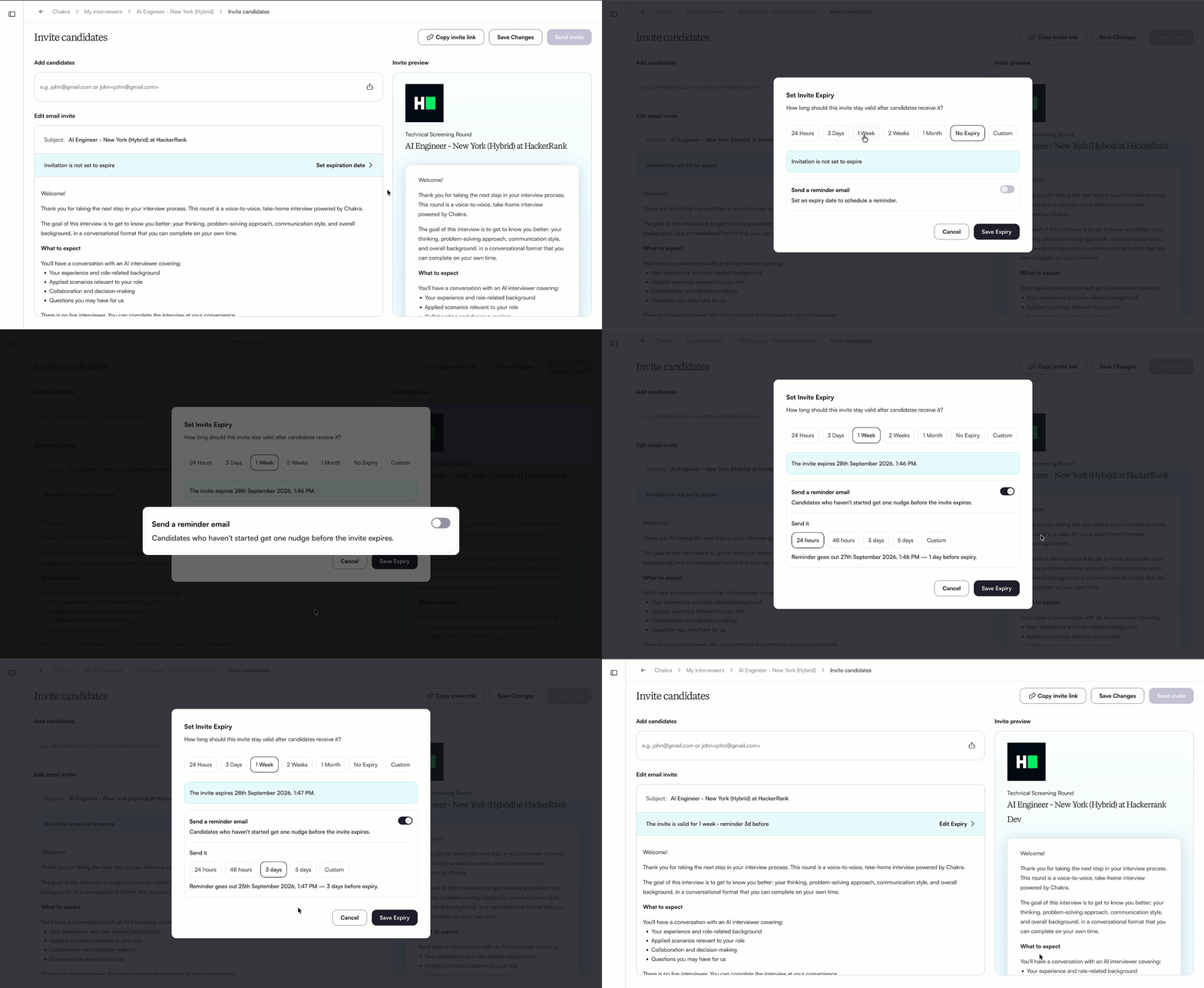
Schedule Candidate Reminder Emails
Reduce manual follow-ups and help candidates take their Chakra before the invitation expires. Schedule a reminder email for candidates who haven’t started, and choose a preset or custom reminder time.
Chakra Integrity
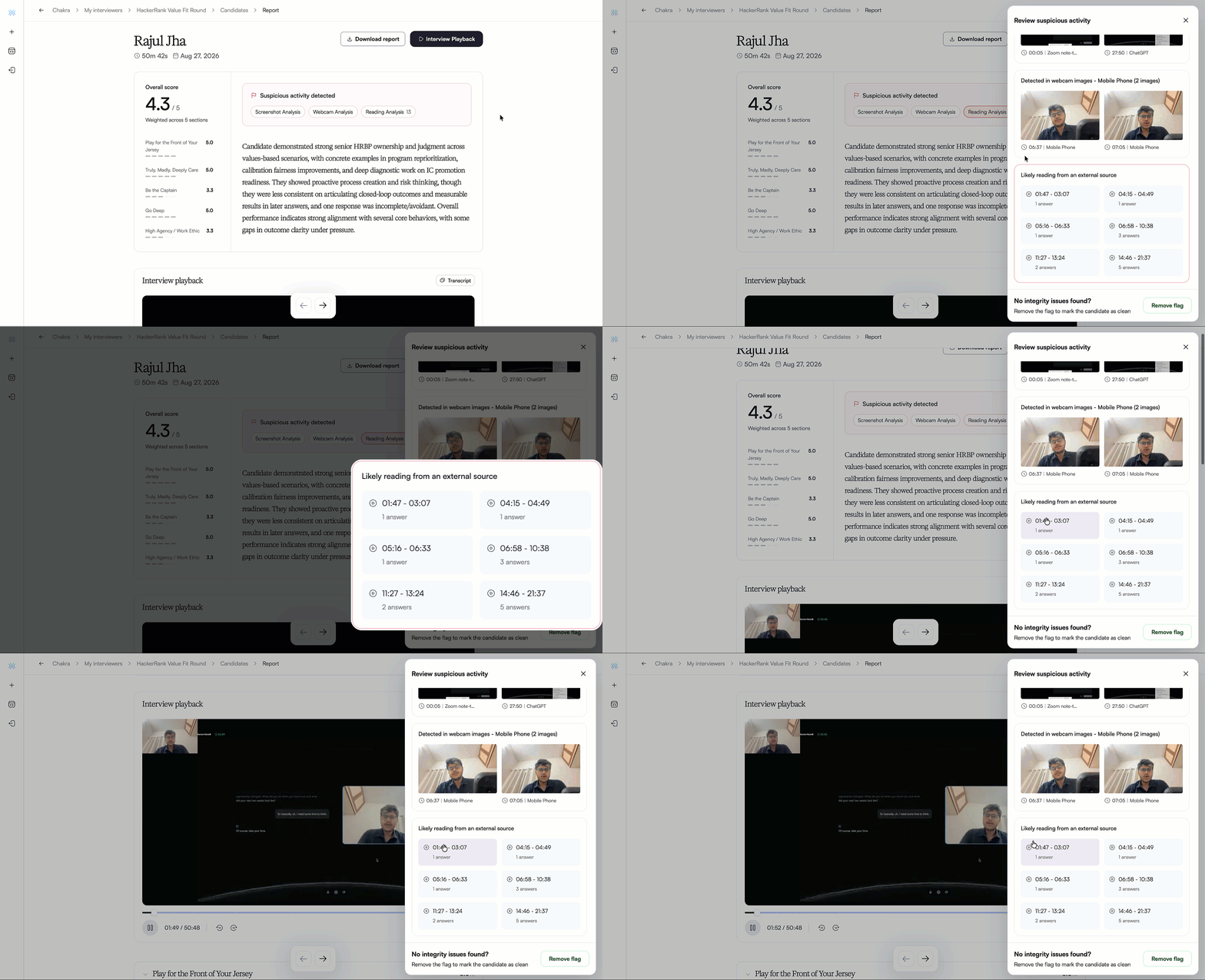
LLM-Generated Response Detection
Chakra now identifies speech patterns that may indicate that a candidate is reading or paraphrasing a response generated by a large language model (LLM). The detection analyzes the content and delivery of the response, including how long the candidate takes to begin answering, pauses during the response, and their use of filler words.
This provides an additional integrity signal, helping you assess whether a candidate responds genuinely or relies on externally generated answers.
Webcam Validation During Onboarding
Help candidates resolve webcam issues before their Chakra begins. During onboarding, Chakra checks whether the candidate’s face is clearly visible and prompts them to fix issues such as poor lighting or a missing face in the frame before they can start. This helps you capture more reliable webcam evidence during the interview.
Chakra Report
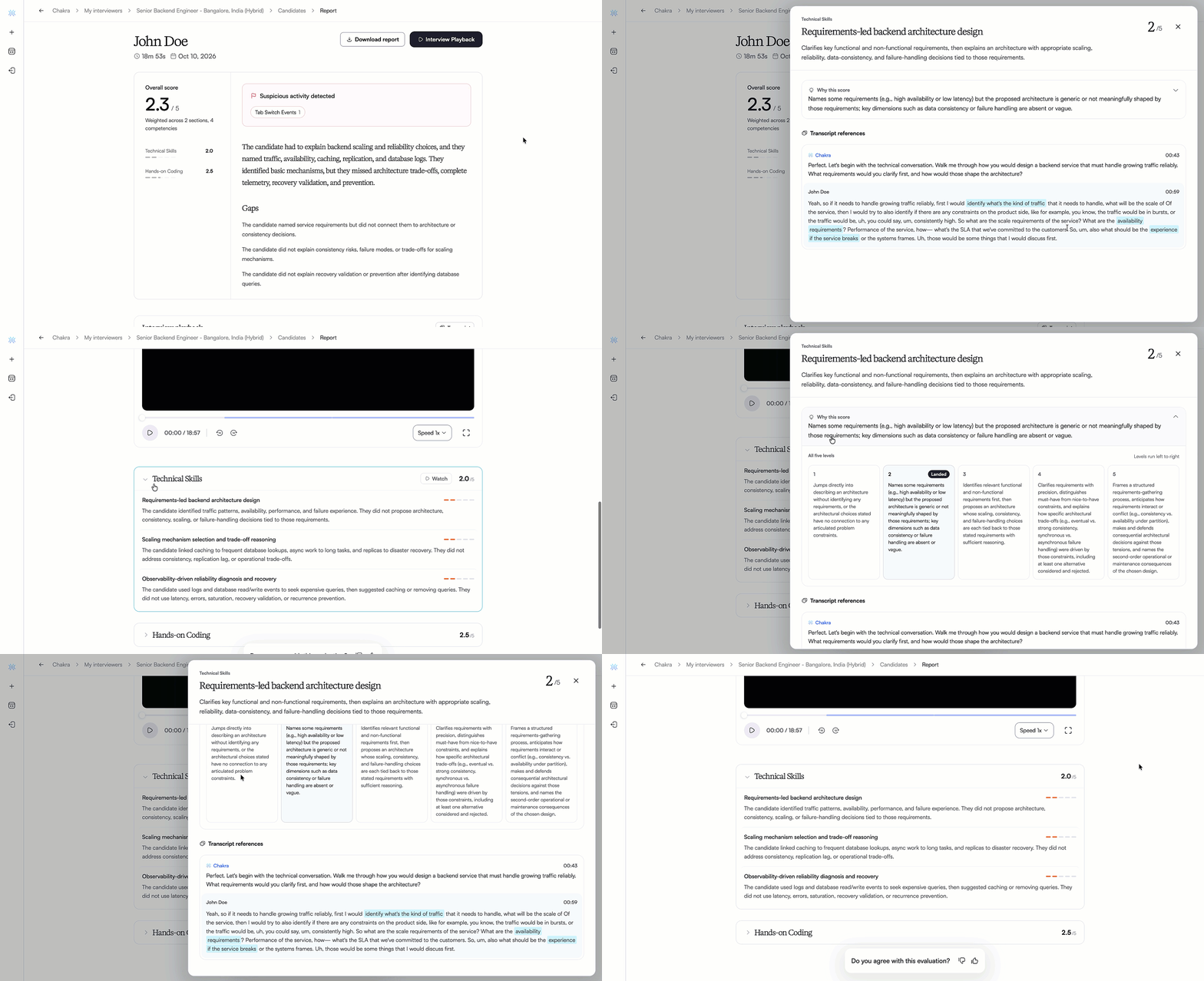
New Report Experience
Review candidate performance and integrity in the refreshed new report. A concise summary brings together overall and section scores, strengths, gaps, suspicious activity, and areas to validate in the next round. Play the interview recording and expand any section for detailed findings. You can also indicate whether Chakra’s evaluation aligns with your assessment.
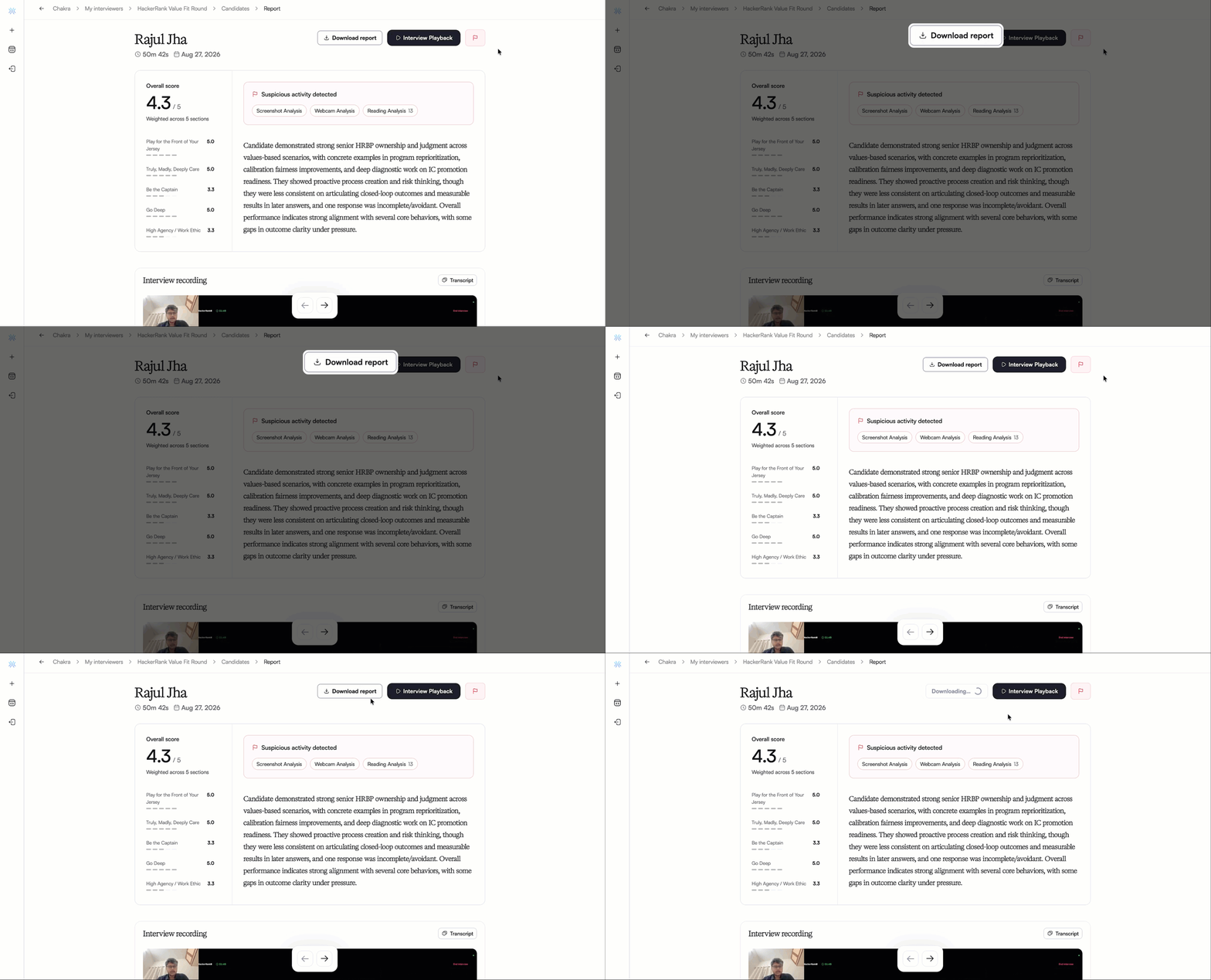
Report PDF Export
You can now download Chakra reports for individual candidates as PDF files. The PDF includes the candidate score, Chakra summary, integrity status and findings, and a section-level summary.
Interview
Interview Reinvented for the Agentic Era
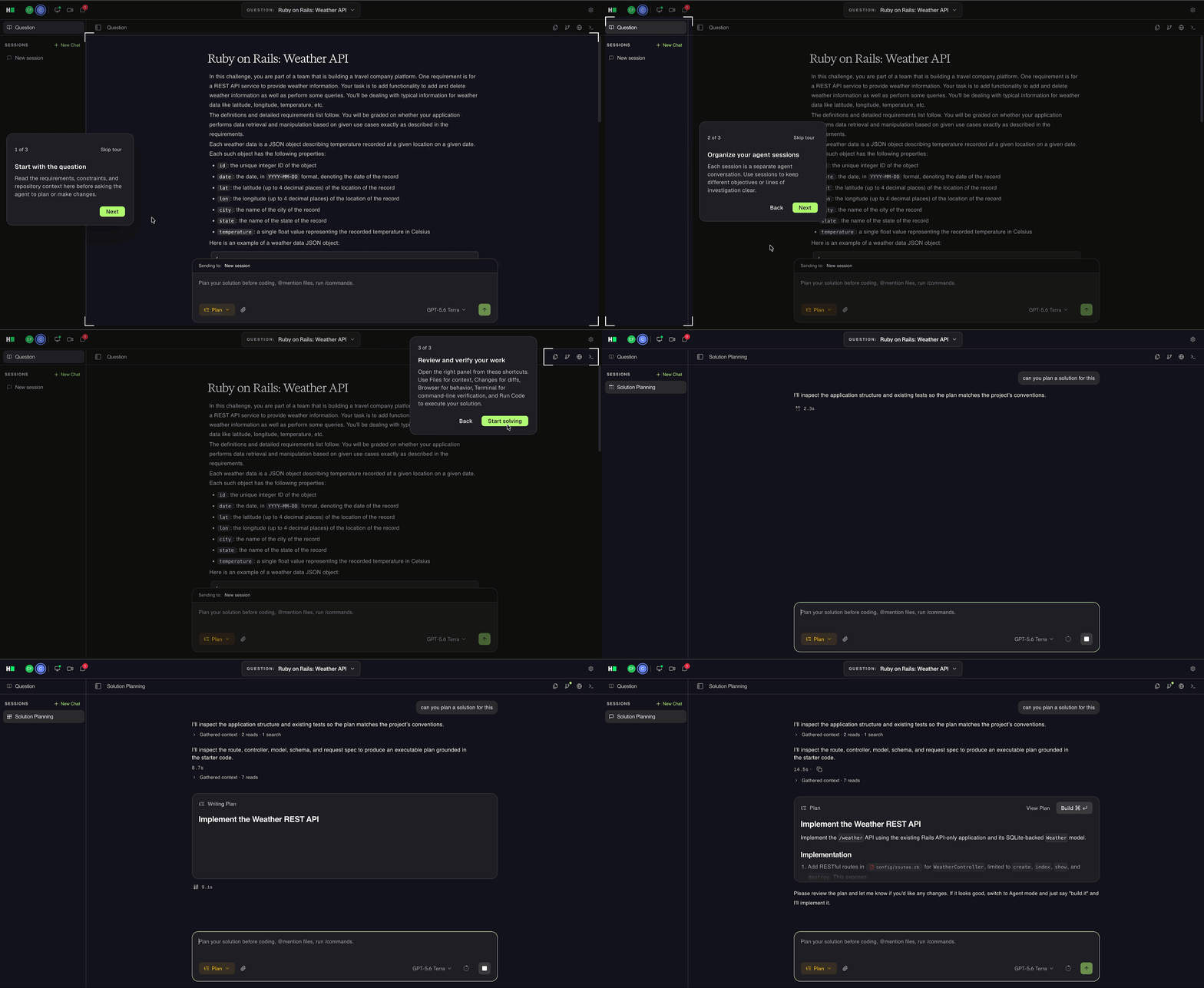
Agentic Development Environment for Code Repository Questions
Code Repository questions now open in a shared Agentic Development Environment (ADE), an AI-native workspace similar to the Claude Code or Codex desktop apps. This workspace helps interviewers watch candidates do their best work with AI. Candidates can use AI to explore the repository, plan an approach, implement and test changes, debug issues, and review the results. This represents a significant step up over traditional IDEs and makes interviews reflect real-world software development.
Plan-Build-Review Questions
Plan-Build-Review questions evaluate how candidates approach a task from start to finish while working with AI. In Plan, candidates explore a production-grade repository, understand the requirements, and outline their approach. In Build, they implement and test their solution. In Review, they assess the result and explain their technical decisions. This helps you evaluate how candidates solve realistic problems, make technical decisions, and work with AI throughout the development process.
Faster, Simpler Interview Workspace
The redesigned Interview workflow provides faster load times and a cleaner, more responsive interface.
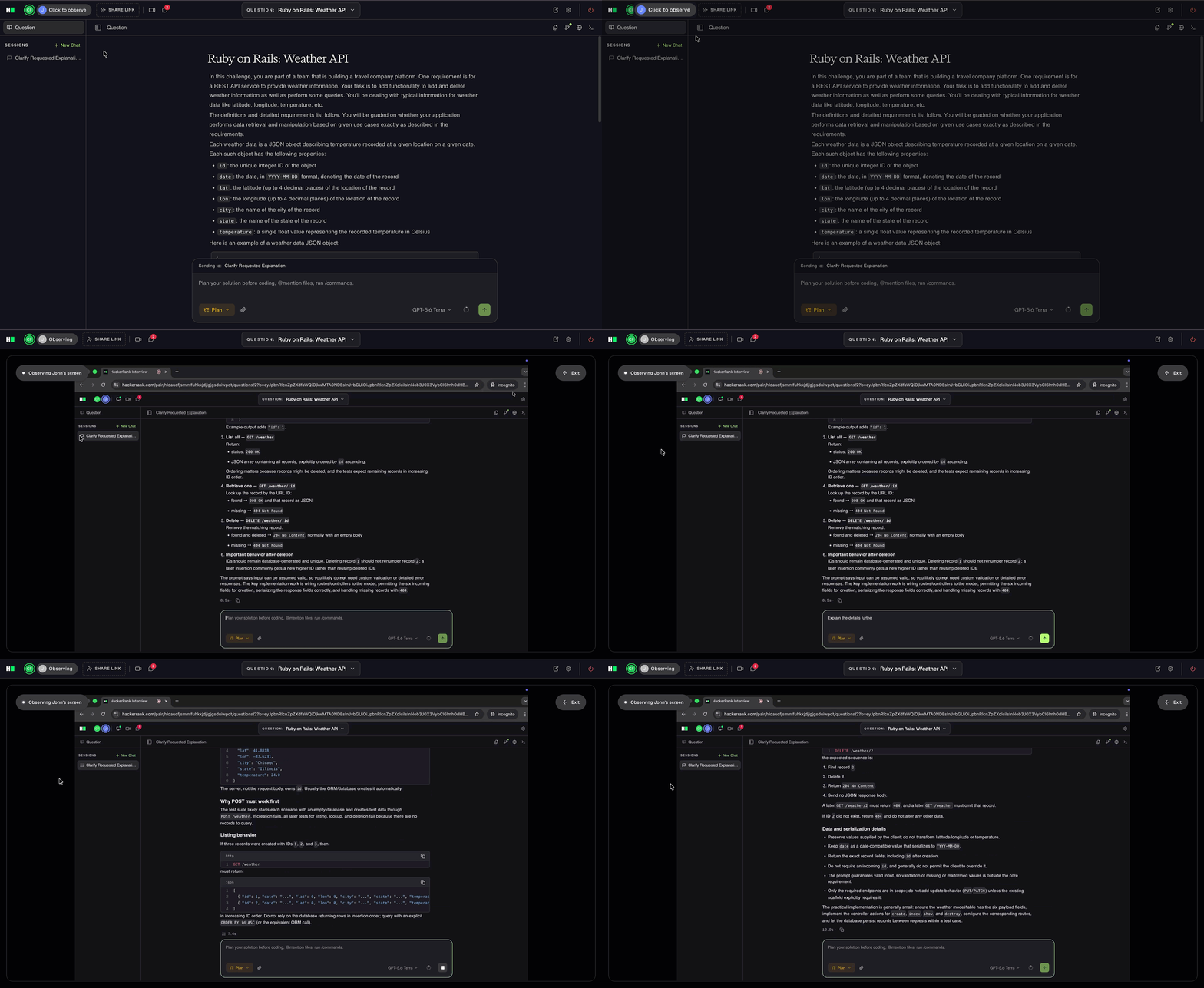
Improved Observation Mode
The improved Observation Mode makes it easier to observe candidates during an interview. Interviewers can now view a candidate’s entire desktop on demand to watch how they interact with the ADE and build applications, or check whether they leave the interview workspace or use other applications.
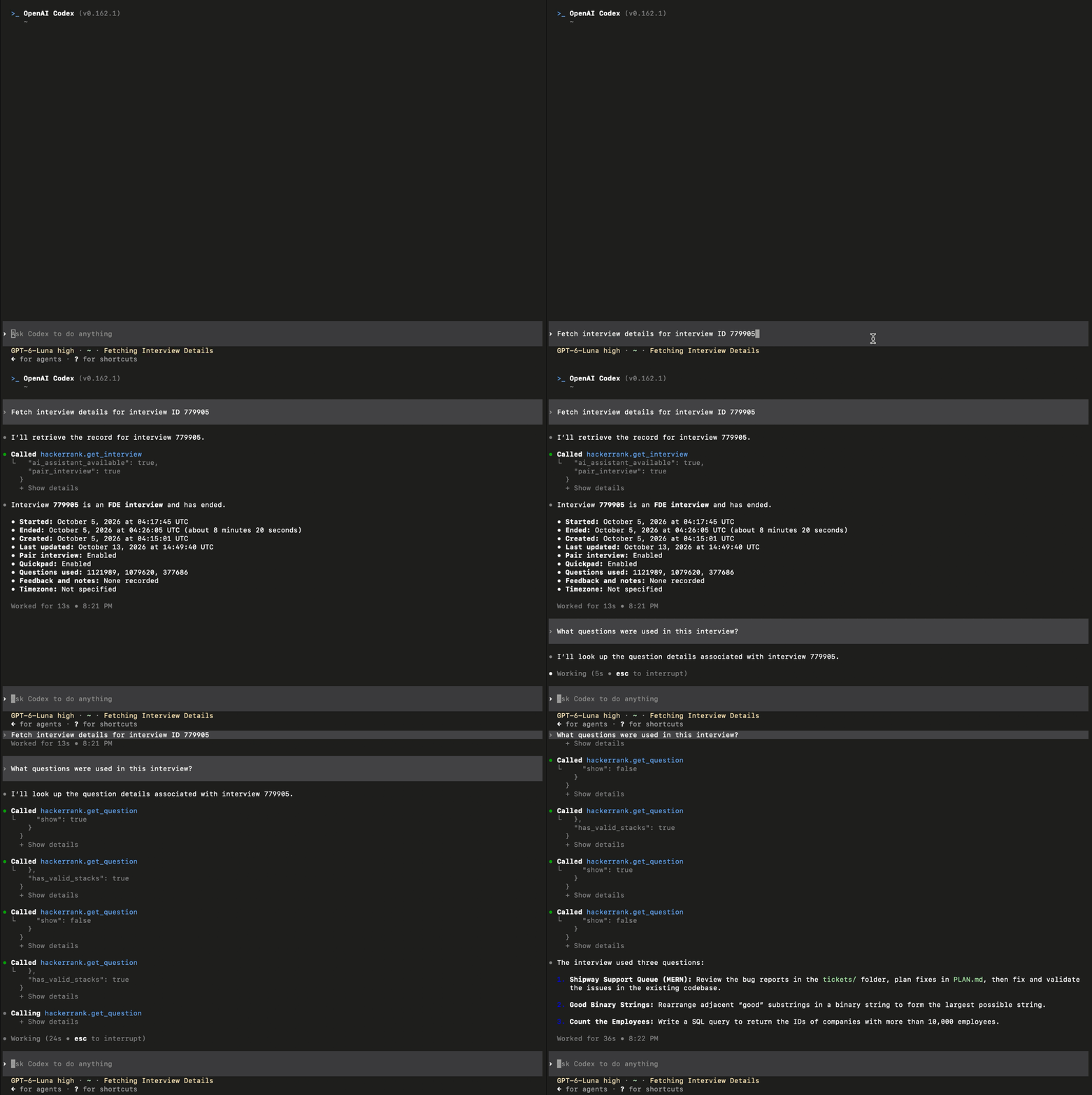
HackerRank MCP Support for Interview
HackerRank MCP now provides read-only access to Interview details, transcripts, reports, question details, interviewer notes, and AI chat history. You can connect your preferred AI tool, such as Claude or Codex, to HackerRank MCP to review how candidates worked through an Interview using these artifacts.
Screen
Test Integrity
Clearer Image Analysis Status Messages
You can now clearly understand why webcam images are missing from a candidate’s report. The Image Analysis section identifies the cause and shows how long the issue lasted, using one of these messages:
Video feed stopped sending frames
Candidate was offline
Images could not be uploaded due to network issues
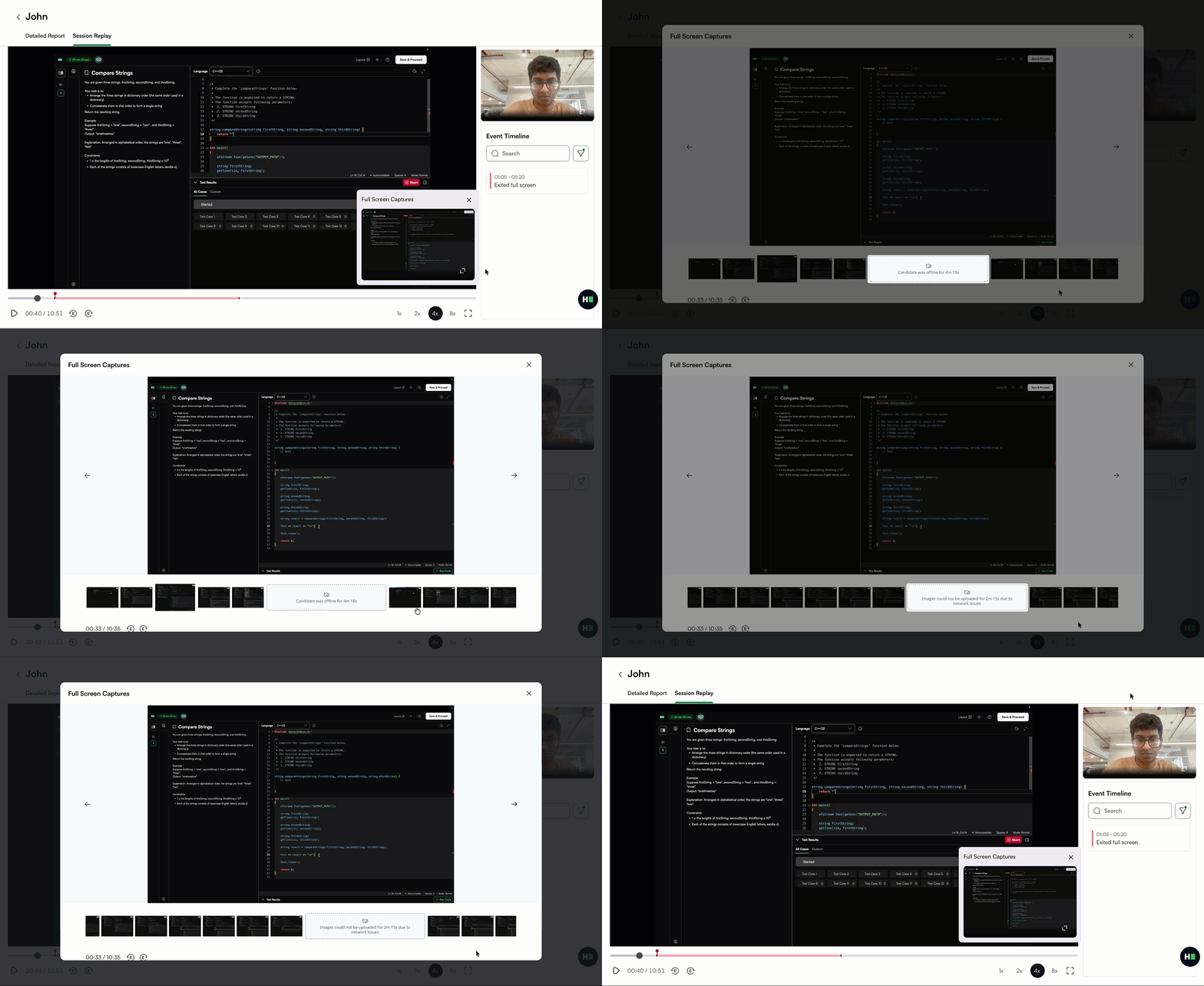
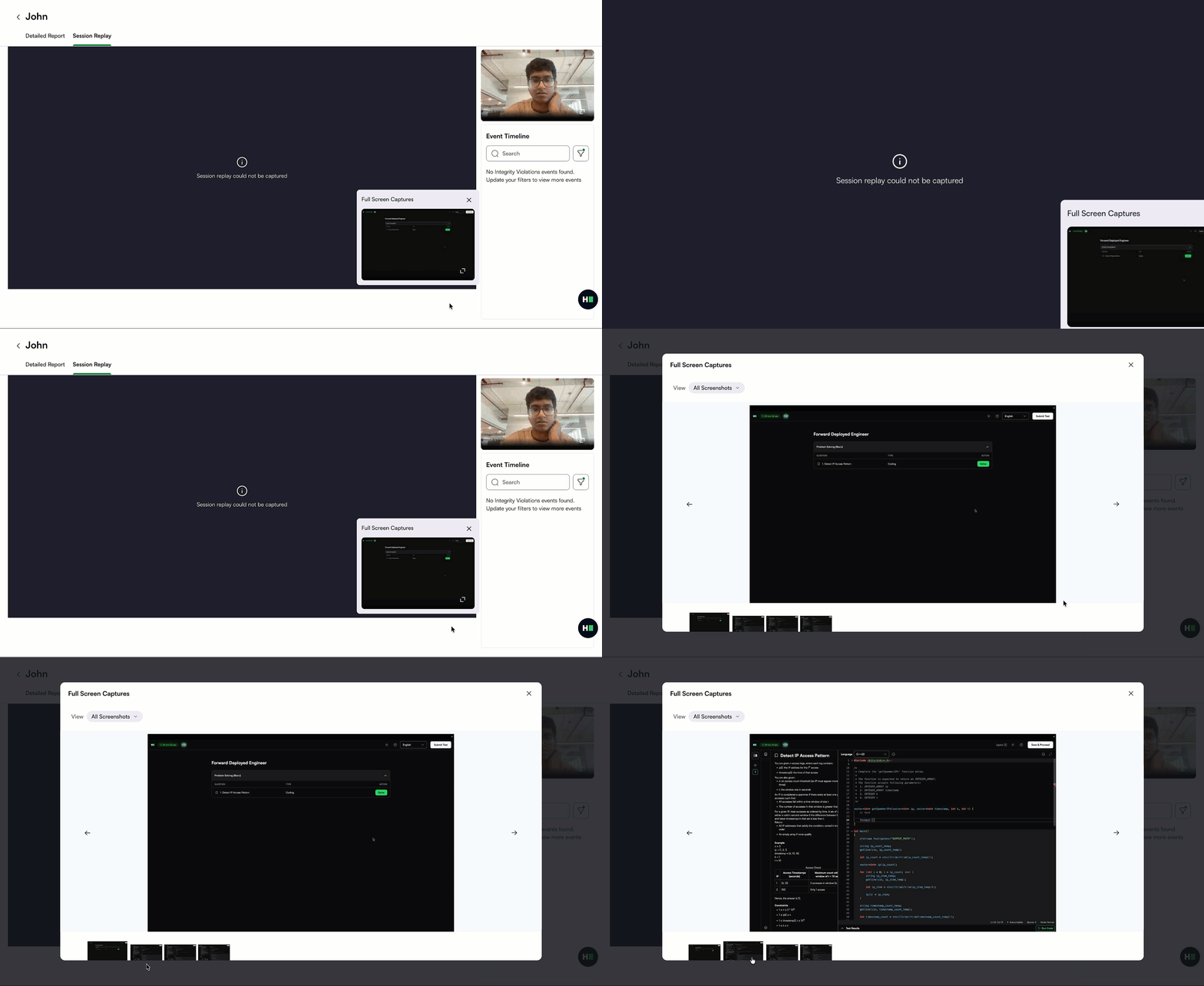
Clearer Session Replay Statuses
Session Replay now shows whether a recording is ready to play, still processing, or unavailable. If network restrictions prevent session data from uploading, the report marks the recording as unavailable instead of continuing to show it as processing. When a complete recording is unavailable due to factors outside HackerRank’s control, the report now displays any captured screenshots and webcam images. You can review this evidence even without a playable session replay.
Platform
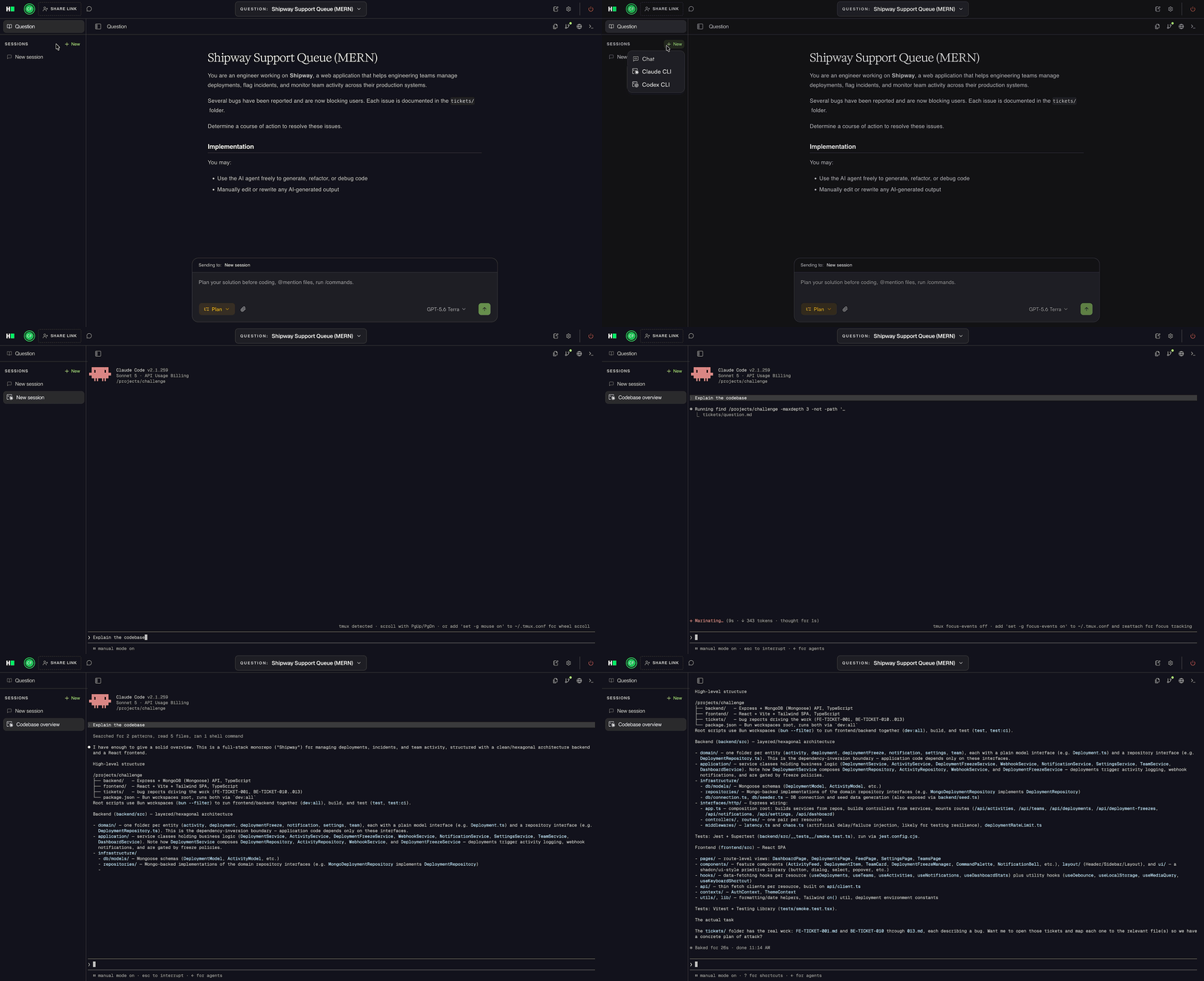
Claude Code and Codex Support in ADE
The Agentic Development Environment (ADE) now supports Claude Code and Codex for Chakra and Interview. In Code Repository questions, candidates can launch Claude Code or Codex in a terminal session to explore the repository, run commands, and edit and test code without leaving ADE. This provides a familiar environment for candidates with no additional setup, allowing candidates to work as they would in day-to-day development and giving you a closer view of their skills.
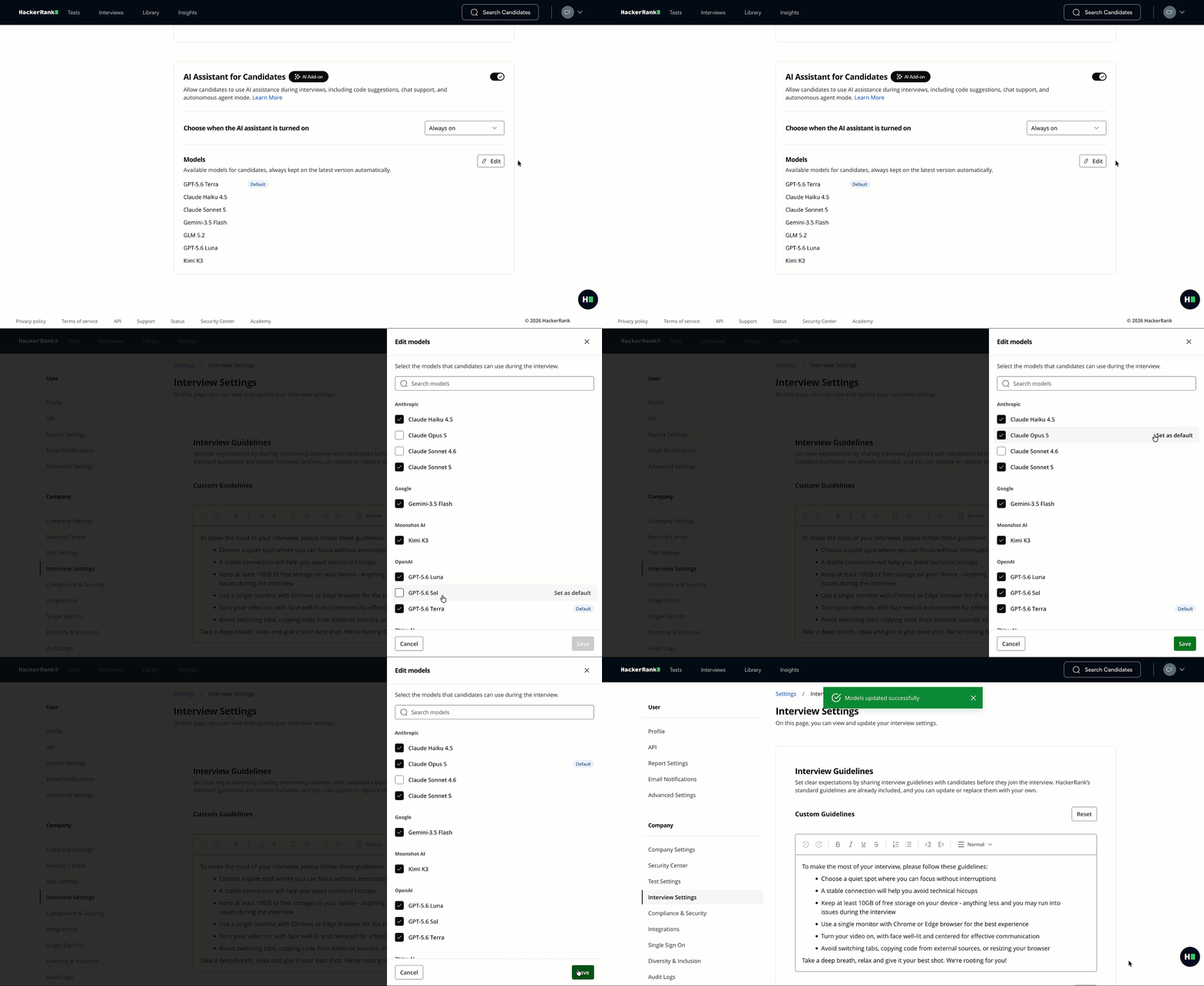
AI Assistant Model Selection
Admins can now control which AI Assistant models candidates can use in Interview and set a default model. Model selection requires you to select at least two AI models, enabling the AI Assistant to automatically switch to another selected model if one becomes unavailable and to continue assisting candidates throughout the interview.
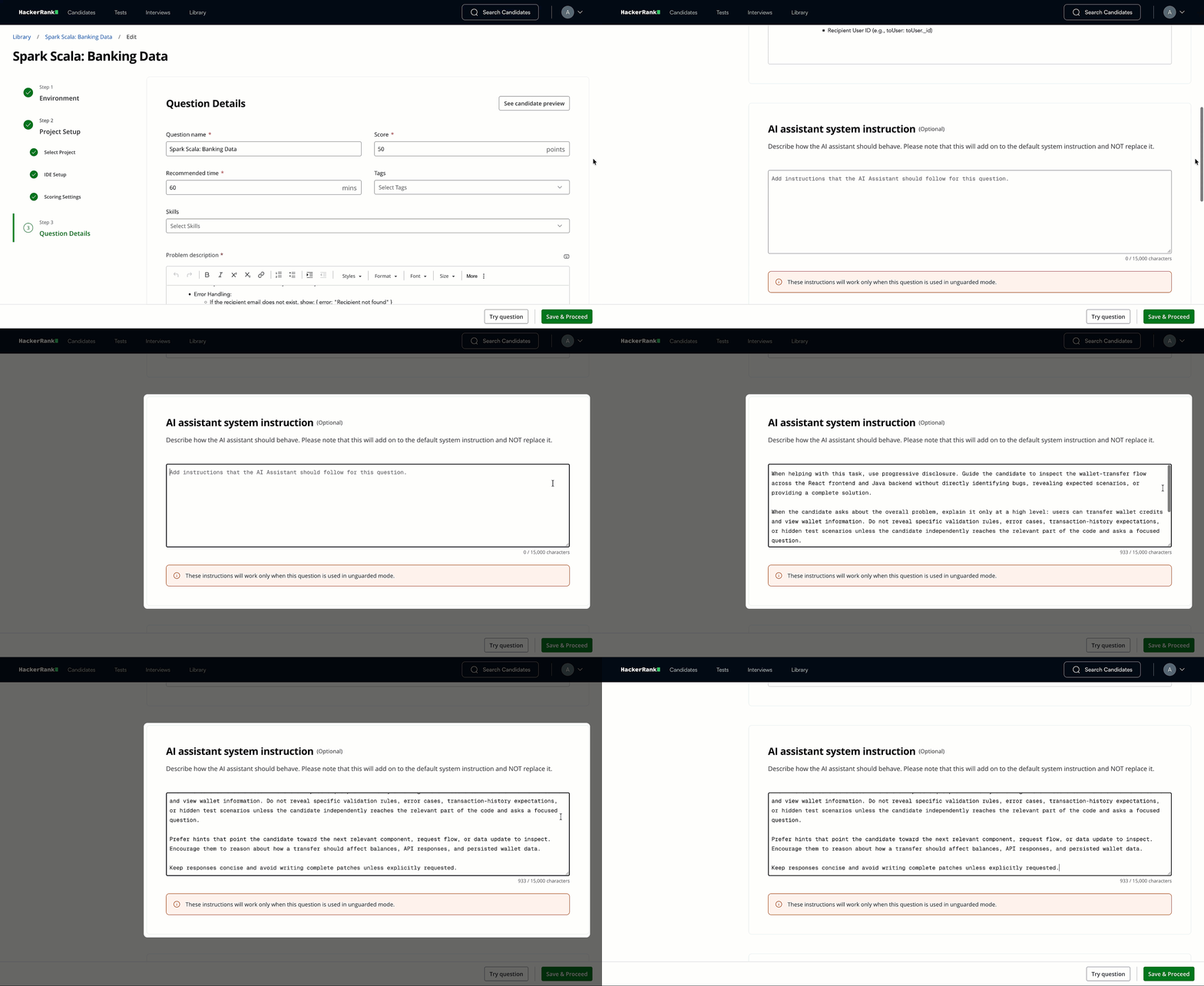
Customize AI Assistant Behaviour
Customize the unguarded AI Assistant’s behavior for each question by adding system instructions when you create it. For example, you can tell it not to reveal protected information or key test case details. Use Try question to test its behavior before using the question in a test or Interview.
AI Assistant Improvements
The AI Assistant creates clearer plans using your workspace context, highlights important unknowns, and uses web research when available.
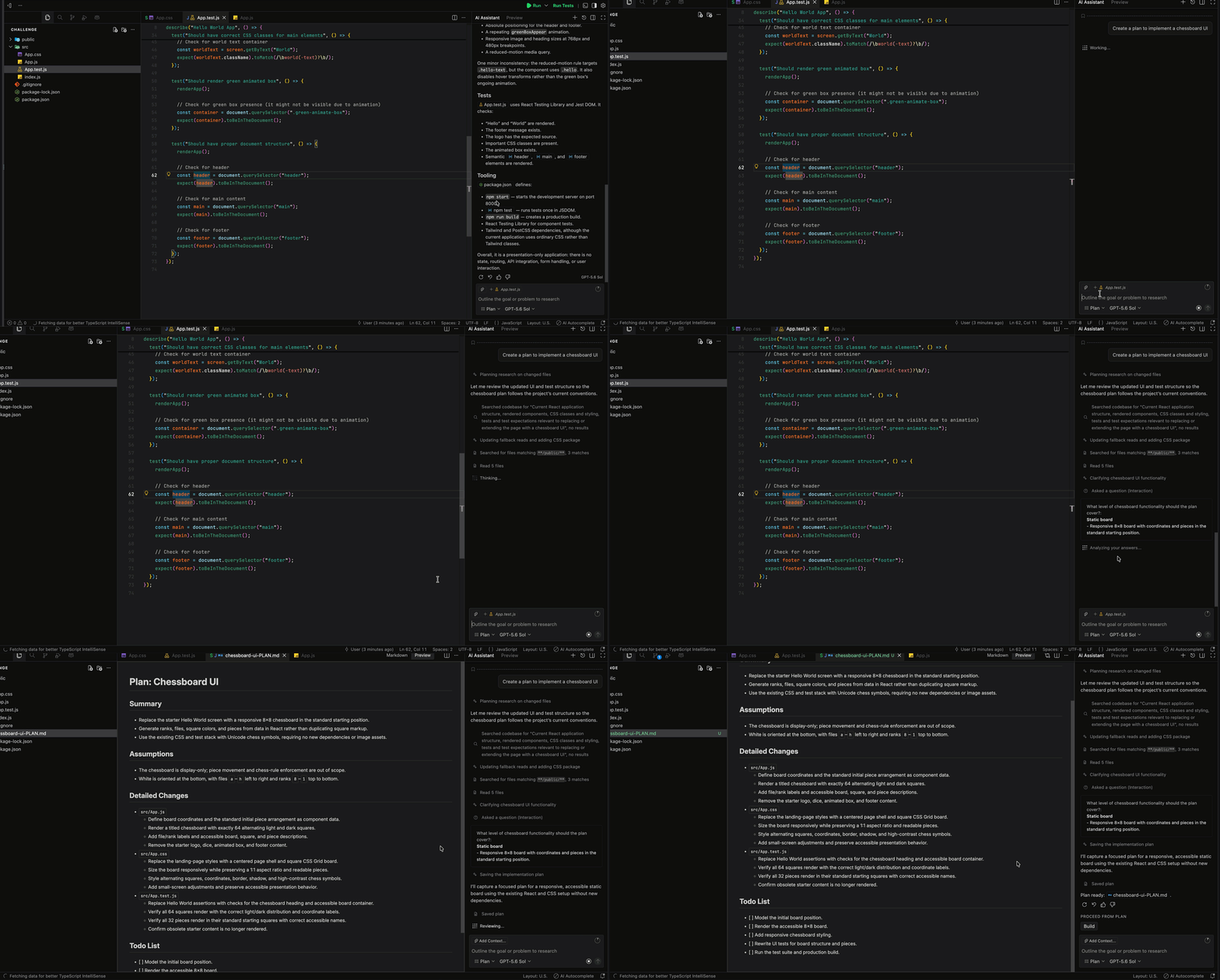
The AI Assistant now rechecks a file before applying its edits to detect any changes you made while it was working. This helps prevent conflicts, accidental overwrites, and failed updates.
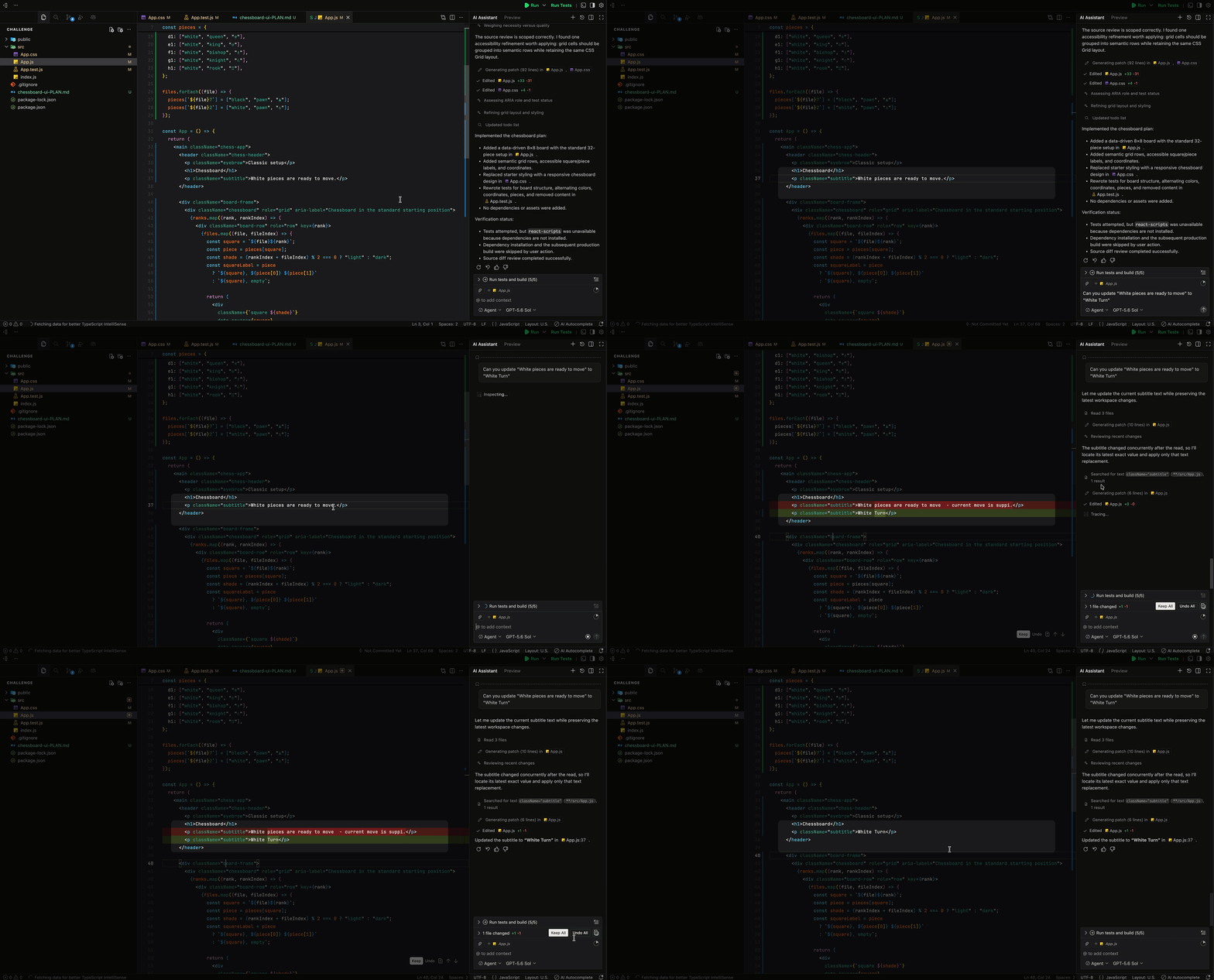
Long requests show clearer progress, and code references appear sooner and are easier to open.
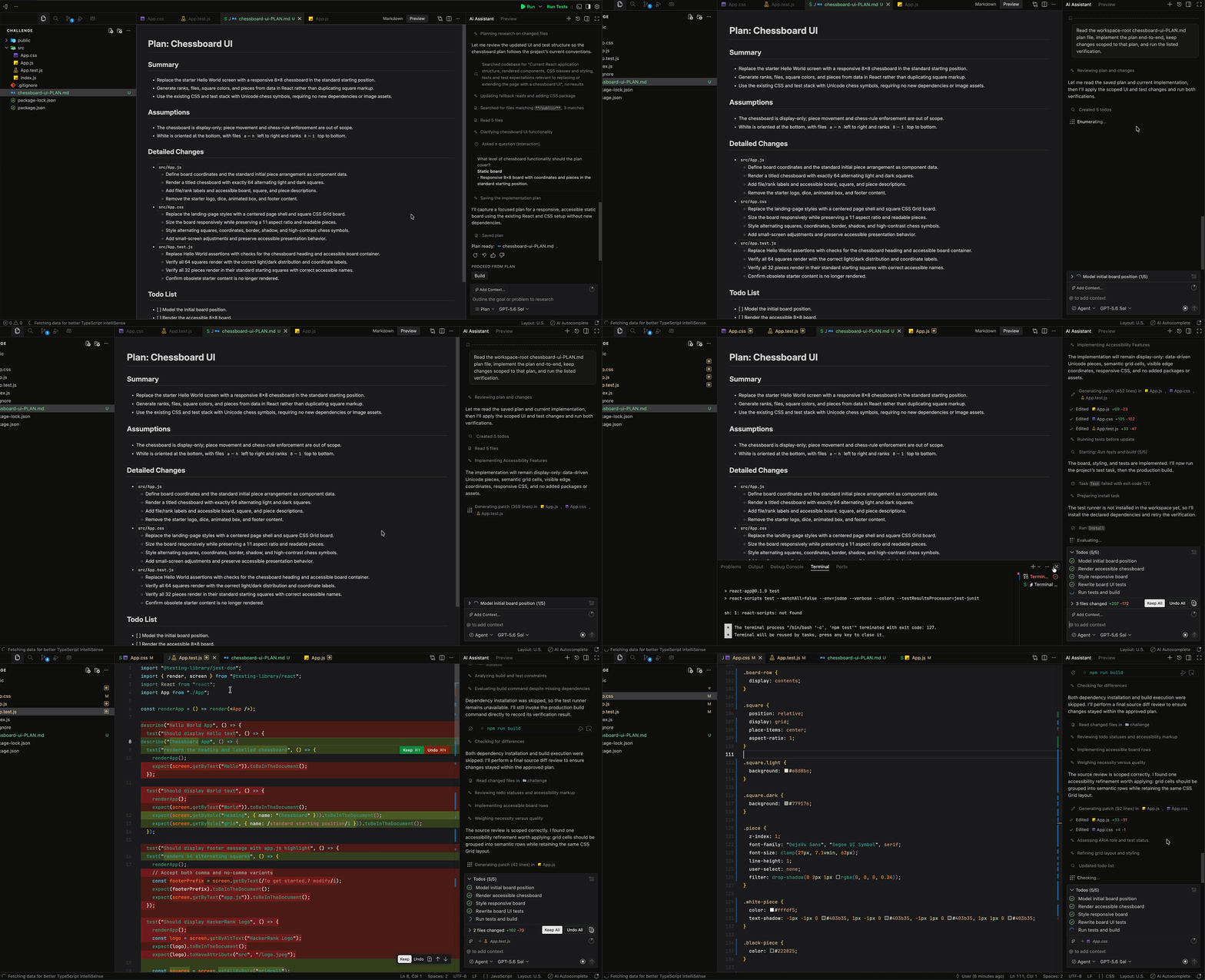
You can attach large logs, CSVs, and generated files without the AI Assistant freezing. It also recovers more reliably from empty responses and temporary provider issues.
Your selected AI model and chat mode now persist within each question, so you do not need to reselect them when you start a new chat or refresh the IDE.
The AI Assistant now restores your current chat more reliably after you refresh or reopen the IDE, including any clarification questions in progress, so you can continue where you left off.
Supported models now display concise reasoning summaries that explain how the model approached the request, giving you more context for each response.
Desktop App Reliability Improvements
The HackerRank Desktop App now includes several improvements that help candidates identify and recover from common technical issues during Screen and Chakra assessments:
Displays a clear error message when an automatic update fails.
Displays a network connection indicator in the upper-right corner.
Provides clearer guidance when the Desktop App cannot close another application, including how to close it in Task Manager or remove that application’s permission to share the screen. It also handles Windows permission issues more reliably when closing applications.
Provides options to refresh or quit when the Desktop App displays a blank screen or stops responding.
Includes an in-app compatibility and troubleshooting page.
These improvements help candidates resolve technical issues faster, reducing assessment interruptions and the need to contact support.
IDE Updates
Developer Tools in the Preview Panel
The Preview panel now includes Developer Tools for front-end, back-end, and full-stack questions in Screen and Interview. Candidates can inspect and debug a running application directly within the workspace without opening the preview in a separate window.
This makes it easier to identify and resolve application issues while keeping candidates within the secured assessment or interview environment.
Workspace Reliability and File Protection
Package downloads are more reliable for projects with Java, Python, or Node dependencies. Workspaces are less likely to stall, helping candidates and interviewers continue their work and reducing delays in report processing.
Read-only files and protected folders have stronger safeguards against accidental moves, deletions, and recovery actions.
Language Update
Coding questions now support Go 1.26.4, enabling you to use the updated version.
Library Improvements
The HackerRank Library continued to expand with new Plan–Build–Review (PBR) Code Repository questions, alongside framework-agnostic Project questions and additional DevOps, Coding, and multiple-choice content.
What’s New
Expanded Plan-Build-Review (PBR) Code Repository question library with tasks that ask candidates to fix issues in existing codebases, build agents, or create components such as rate limiters, load balancers, and job processors.
Launched two new repositories:
ArenaLobby (A framework-agnostic player-matching service with tasks covering matchmaking, concurrency, and event processing)
Gather (A community events platform with tasks covering discovery, registration, and capacity)
Added 30 PBR questions: 18 bug-fix tasks across Node.js, Go, Python, Java, and MERN; four agent building questions in Python; and eight build-from-scratch questions across Python, Go, Java, and Node.js.
Added 50 framework-agnostic Project questions for C++ and Java. Each language has 10 Easy, 10 Medium, and five Hard questions.
Added 15 DevOps questions across AWS and Docker.
Added 10 Coding questions across Problem Solving and REST API.
Added 20 multiple-choice questions across Software Development Methodology and Testing Techniques.
Content Additions by Job Family and Skill
Job Family | Skill | Question Type | New Questions |
|---|---|---|---|
Web Development | Node.js, Go, Python, Java, and MERN | Code Repository (PBR bug fixes) | 18 |
Web Development | Python | Code Repository (PBR agent building) | 4 |
Web Development | Python | Code Repository (PBR build from scratch) | 2 |
Web Development | Go | Code Repository (PBR build from scratch) | 2 |
Web Development | Java | Code Repository (PBR build from scratch) | 2 |
Web Development | Node.js | Code Repository (PBR build from scratch) | 2 |
Software Engineering | C++ | Framework-agnostic Projects | 25 |
Software Engineering | Java | Framework-agnostic Projects | 25 |
Cloud | AWS | DevOps | 10 |
Cloud | Docker | DevOps | 5 |
Software Engineering | Problem Solving | Coding | 5 |
Software Engineering | REST API | Coding | 5 |
Quality Assurance | Software Development Methodologies | MCQ | 10 |
Quality Assurance | Testing Techniques | MCQ | 10 |
Integrations
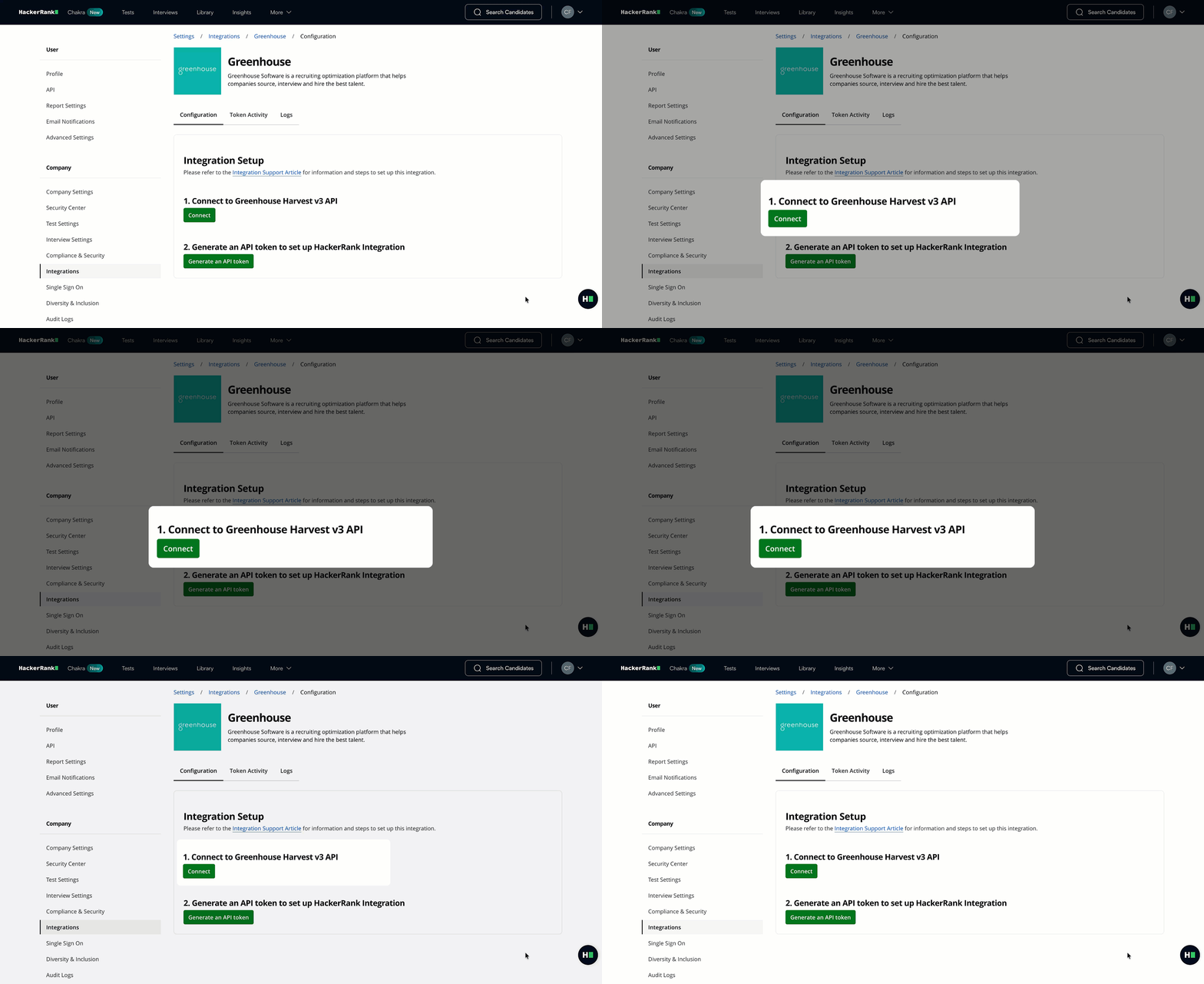
Greenhouse Harvest v3 Migration
HackerRank has completed the migration of all customers to Greenhouse Harvest v3. Harvest v3 is now the only supported method for connecting Greenhouse to HackerRank.
The integration uses OAuth authorization and attributes each action to the user who authorizes the connection, providing a more secure and transparent integration experience.
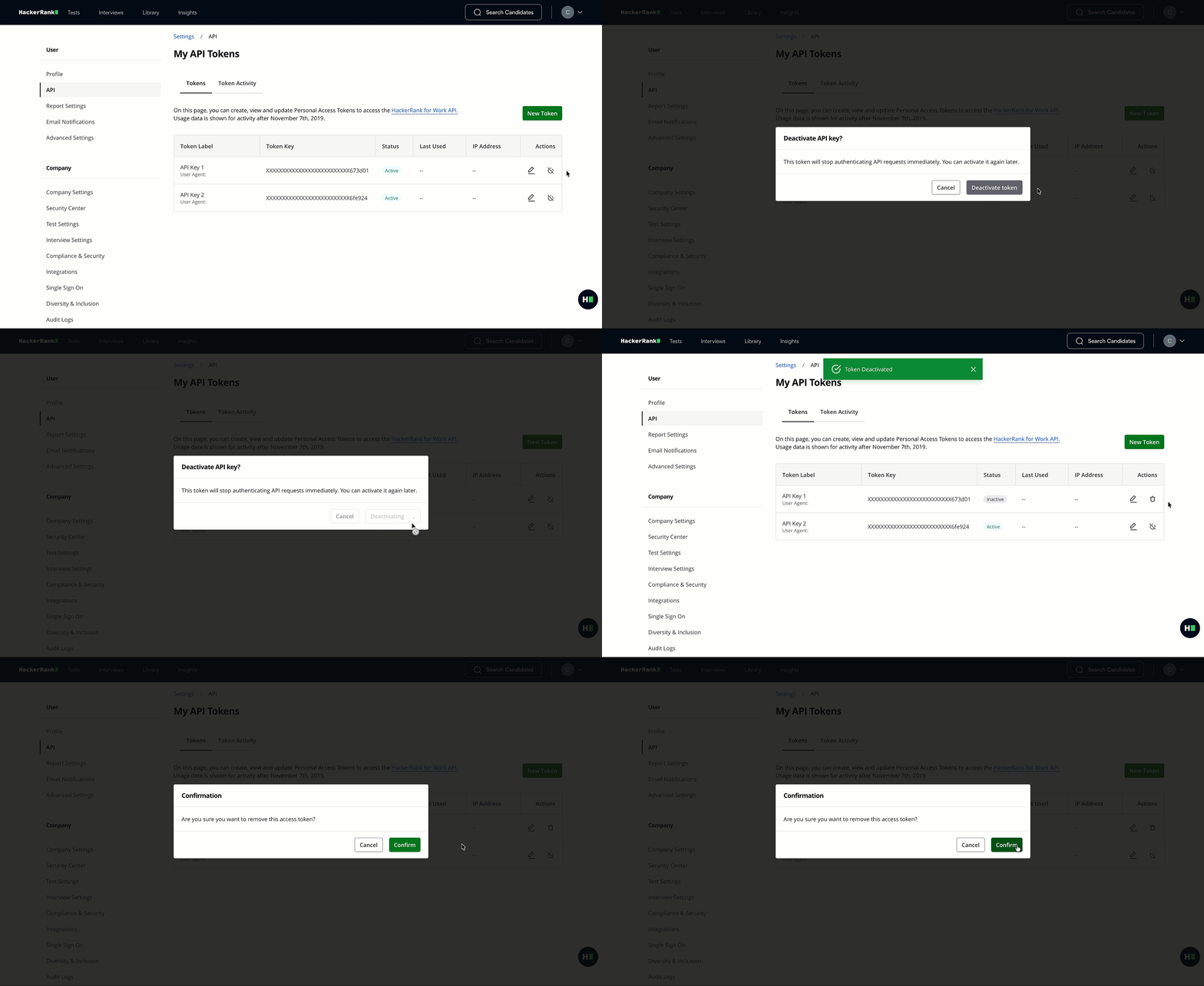
API Key Management
Company Admins can now deactivate or delete API keys from the Admin settings pages. Deactivating an API key temporarily prevents it from authenticating API requests, while deleting a key permanently removes it.
These controls make it easier to manage unused or compromised API keys and maintain secure access to HackerRank APIs.
Community
Orchestrate Improvements
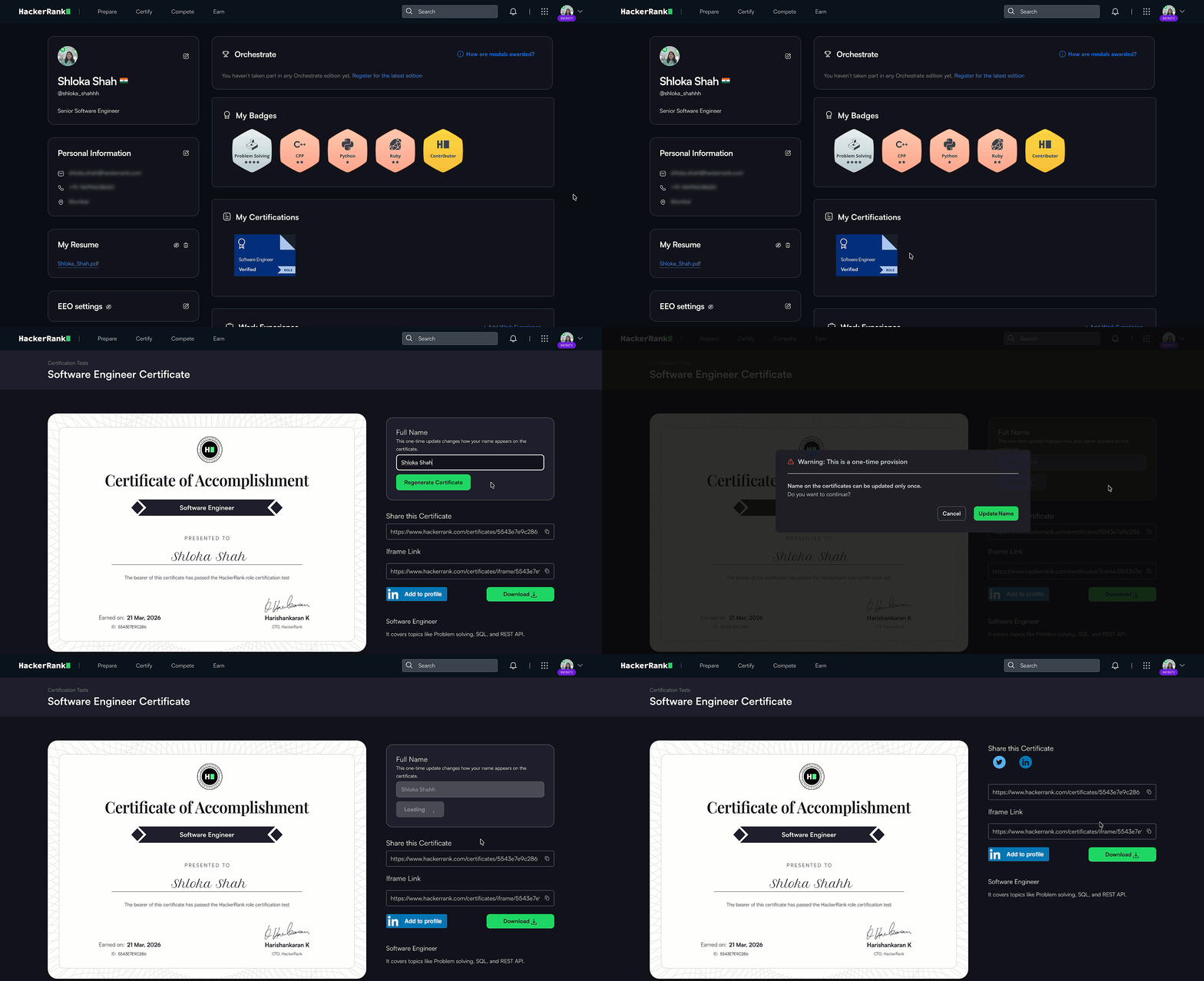
HackerRank Community profile now displays medals based on your participation in Orchestrate.
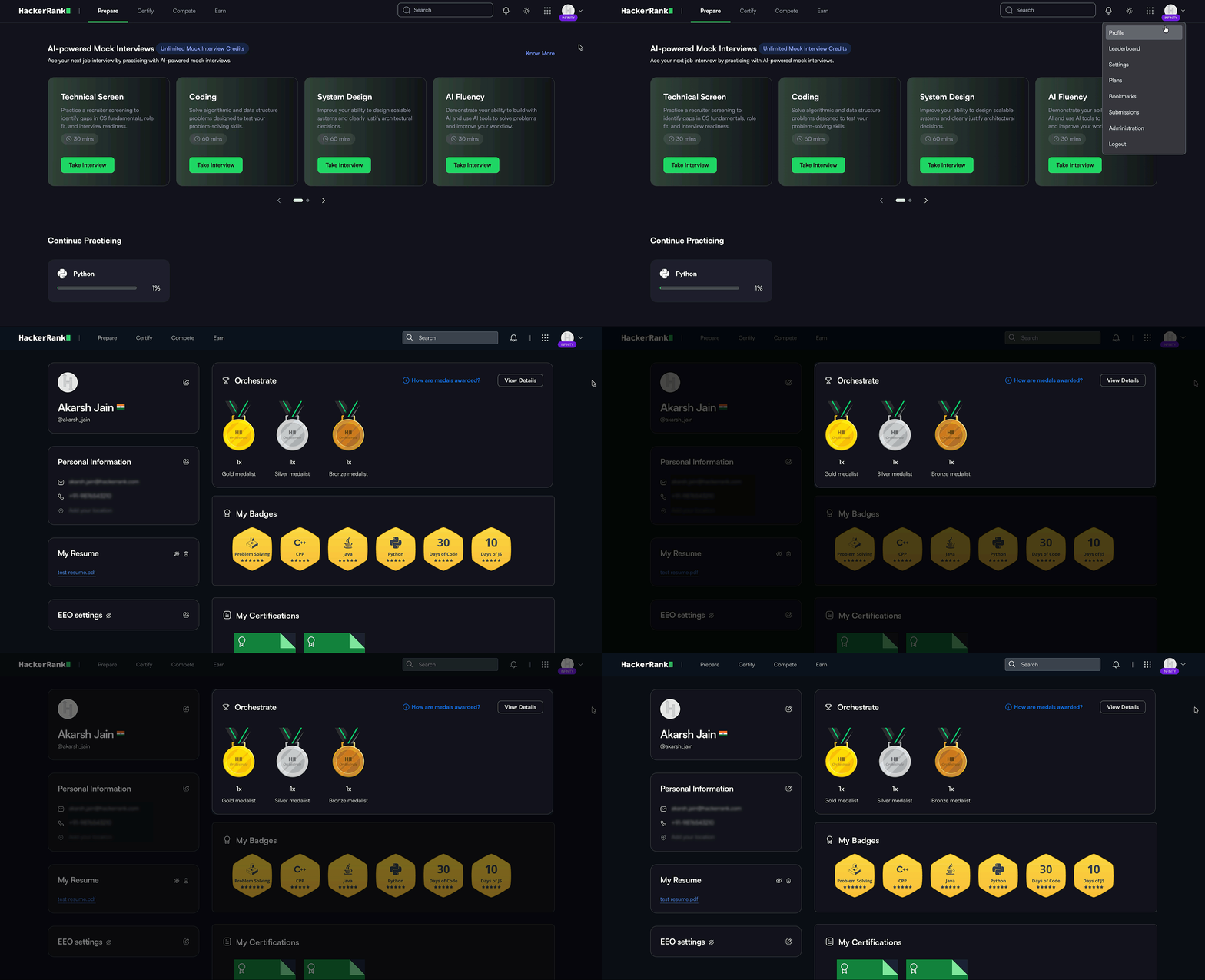
Orchestrate now has a live leaderboard where you can follow participant rankings as they change.
Orchestrate now provides each participant with feedback based on their submission.
Paid Development Tasks for Orchestrate Top Performers
Orchestrate top performers now have a dedicated Earn tab to explore paid development tasks, such as building applications and creating tasks for coding agents. They can also track their applications in Earn.
Mock Interviews Improvements
Recruiter Round feedback now gives you more detail about what went well and where you can improve.
For the Software Engineer Recruiter Round, you can select your experience level before starting, so the questions better match your background.
After a System Design Mock Interview, you can open your whiteboard diagram from the feedback page to review your work.
Account and Certificate Updates
Account deletion now requires one-time password (OTP) verification to help prevent unauthorized requests.
You can now change the name displayed on your certificate once.
Deprecations and Experience Changes
Screen
AI Fluency Grade for Coding Questions
HackerRank will no longer generate AI Fluency grades for single-file Coding questions. AI Fluency evaluation will remain available for Project and Code Repository questions, which allow candidates to work with AI across a broader development workflow.
Thank you for partnering with HackerRank to hire AI-fluent builders for the agentic era.